Best EHR Software for FQHCs 2026: Community Health Center Comparison
The best EHR software for FQHCs in 2026 combines comprehensive patient management with HRSA compliance capabilities, social determinants of health (SDOH) tracking, and robust reporting for Uniform Data System (UDS) requirements. Leading platforms include NextGen Healthcare, eClinicalWorks, Netsmart, Greenway Health, and SocialRoots.ai, each offering distinct features for hospitals, health centers, community health organizations, and FQHCs serving diverse patient populations.
According to the National Association of Community Health Centers, over 1,400 health centers operate more than 14,000 service delivery sites nationwide, serving 30 million patients annually. These organizations require specialized EHR functionality that addresses unique operational challenges, including sliding fee scale management, grant reporting, and care coordination across multiple social service providers.
Explore FQHC EHR SolutionsEssential EHR Requirements for FQHCs in 2026
Federally Qualified Health Centers face distinct operational requirements that differentiate their EHR needs from traditional healthcare providers. The 21st Century Cures Act mandates interoperability standards under 45 CFR 170, requiring EHR systems to support seamless data exchange with health information exchanges and community partners.
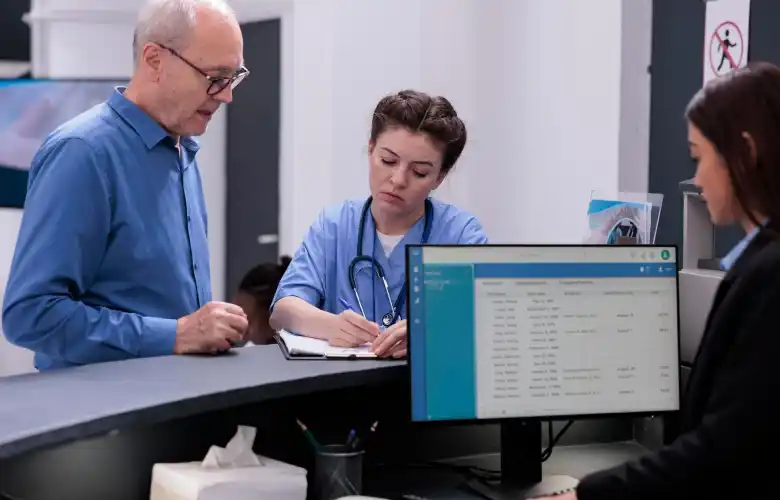
Critical FQHC EHR capabilities include UDS reporting automation, sliding fee scale calculation, HRSA compliance tracking, and integrated SDOH screening tools. The Health Resources and Services Administration requires comprehensive data collection across clinical quality measures, financial metrics, and patient demographic information that standard EHR platforms may not fully address.
Modern FQHC EHR systems must support value-based care initiatives, population health management, and care coordination with community-based organizations. Integration with referral management platforms becomes essential for addressing patient needs beyond clinical care, particularly for underserved populations requiring wraparound services.
Top EHR Software Platforms for FQHCs
NextGen Healthcare
NextGen Healthcare offers population health management tools, quality reporting dashboards, and patient engagement features designed for community health settings. The platform includes built-in analytics for clinical performance tracking and supports integration with third-party applications through FHIR APIs. Revenue cycle management capabilities include sliding fee scale processing and insurance verification workflows.
eClinicalWorks
eClinicalWorks provides comprehensive EHR functionality with integrated practice management, patient portal access, and telehealth capabilities. The platform supports quality measure reporting, clinical decision support tools, and customizable documentation templates. Patient engagement features include appointment scheduling, prescription refill requests, and secure messaging between providers and patients.
Netsmart
Netsmart specializes in behavioral health and human services integration, offering EHR capabilities that extend beyond traditional clinical documentation. The platform includes care coordination tools, outcome measurement tracking, and integrated billing for multiple funding sources. SDOH assessment capabilities support comprehensive patient evaluation and community resource connection.
Greenway Health
Greenway Health delivers cloud-based EHR solutions with ambulatory care focus, including specialty-specific templates and clinical workflow optimization. The platform offers quality reporting automation, patient engagement tools, and revenue cycle management features. Integration capabilities support connection with laboratories, pharmacies, and health information exchanges.
SocialRoots.ai
SocialRoots.ai provides Pillar community healthcare management software that combines EHR functionality with comprehensive SDOH referral management and care coordination capabilities. The platform includes automated UDS reporting, sliding fee scale management, and integrated community resource directories. Built-in analytics support population health initiatives and grant reporting requirements specific to FQHC operations.
Feature availability evolves regularly. We recommend verifying current capabilities directly with each vendor.
Schedule EHR DemoKey Evaluation Criteria for FQHC EHR Selection
HRSA Compliance and Reporting
Successful FQHC EHR implementation requires robust UDS reporting capabilities that automate data collection across clinical, financial, and operational metrics. Platforms must support Health Center Patient-Centered Medical Home recognition requirements and quality improvement initiatives mandated by HRSA funding agreements.
Sliding fee scale automation becomes critical for FQHCs serving patients with varying financial circumstances. EHR systems should calculate patient responsibilities based on federal poverty guidelines and support documentation requirements for charitable care and sliding fee discounts.
Simplify FQHC Compliance and Reporting
Managing HRSA requirements, UDS reporting, audits, and regulatory documentation can be challenging for community health centers. ComplAiance360 helps organizations streamline compliance workflows, centralize documentation, monitor regulatory requirements, and reduce administrative burden.
Population Health and Care Coordination
Community health centers require EHR platforms that support comprehensive population health management, including chronic disease registries, preventive care tracking, and patient outreach capabilities. Integration with SDOH referral request management platforms enables coordination with community-based organizations addressing housing, food security, transportation, and social service needs.
Care team collaboration features support multidisciplinary approaches common in FQHC settings, including behavioral health integration, pharmacy services, and community health worker programs. Patient portal functionality should accommodate diverse populations with varying technology access and health literacy levels.
Integration and Interoperability
EHR integration solutions must support connection with health information exchanges, state immunization registries, and prescription drug monitoring programs. API capabilities enable integration with specialized applications for grant management, quality improvement, and community resource coordination.
Interoperability standards of compliance ensure seamless data exchange with referral partners, specialist providers, and hospital systems serving FQHC patients. Cloud-based deployment options support multi-site operations and disaster recovery requirements common among health center networks.
Implementation Considerations for Community Health Centers
EHR implementation in FQHC environments requires careful planning around operational continuity, staff training, and patient access during transition periods. According to the Office of the National Coordinator for Health Information Technology, average EHR implementation timelines range from 6 to 18 months, depending on organizational complexity and customization requirements.
Change management strategies should address workflow modifications, staff resistance, and patient communication about new systems and processes. Training programs must accommodate diverse skill levels and ensure competency across clinical, administrative, and support staff roles.
Budget considerations include software licensing, hardware requirements, implementation of services, ongoing support costs, and potential productivity impacts during transition periods. Total cost of ownership analysis should evaluate direct costs against operational efficiency gains and quality improvement outcomes.
Future Trends in FQHC EHR Technology
Artificial intelligence integration will enhance clinical decision support, automate routine documentation tasks, and improve population health analytics. Machine learning capabilities will support predictive modeling for patient risk stratification and intervention prioritization.
Social determinants of health integration will become standard EHR functionality, supporting comprehensive patient assessment and community resource coordination. Platforms will increasingly include built-in community resource directories and automated referral workflows.
Value-based care reporting will drive EHR development toward enhanced analytics, outcome tracking, and performance measurement capabilities. Integration with quality improvement initiatives and alternative payment models will become essential for FQHC sustainability.
Get FQHC EHR AssessmentFrequently Asked Questions
FQHC-appropriate EHRs include UDS reporting automation, sliding fee scale calculation, HRSA compliance tracking, SDOH screening integration, and population health management tools designed for underserved populations.
Implementation timelines range from 6 to 18 months, depending on organizational size, customization requirements, data migration complexity, and staff training needs across multiple service delivery sites.
Costs vary significantly based on user count, feature requirements, and deployment models. Monthly per-provider fees range from $200 to $800, with additional costs for implementation, training, and ongoing support services.
Modern FQHC EHR platforms increasingly include integration with community resource directories and SDOH referral management systems, supporting comprehensive care coordination beyond clinical services.
Training requirements include clinical documentation, HRSA reporting procedures, sliding fee scale processing, patient portal administration, and quality improvement workflow integration across diverse staff roles and skill levels.