AI Phone Agents in Healthcare 2026: How AI Callers Are Improving Patient Outreach
AI phone agents in healthcare are automated systems that conduct voice-based patient outreach using artificial intelligence and natural language processing. These systems handle appointment reminders, health screenings, care gap notifications, and follow-up calls without human intervention. Healthcare organizations including hospitals, health centers, community health organizations, and FQHCs are implementing AI phone agents to address staffing shortages while improving patient engagement rates by up to 40% compared to traditional outreach methods.
The healthcare industry faces unprecedented challenges in patient engagement. Staff shortages, increasing patient volumes, and regulatory compliance requirements create operational pressure across all healthcare settings. AI phone agents offer a scalable solution that maintains personalized patient interactions while reducing administrative burden on clinical staff.
Discover how our AI Caller transforms patient outreach for healthcare organizations. Explore AI Phone Solutions
Understanding AI Phone Agent Technology in Healthcare
AI phone agents utilize advanced conversational AI, speech recognition, and natural language understanding to conduct meaningful patient conversations. These systems integrate with electronic health records (EHR), practice management systems, and patient portals to access relevant patient information and update records automatically.
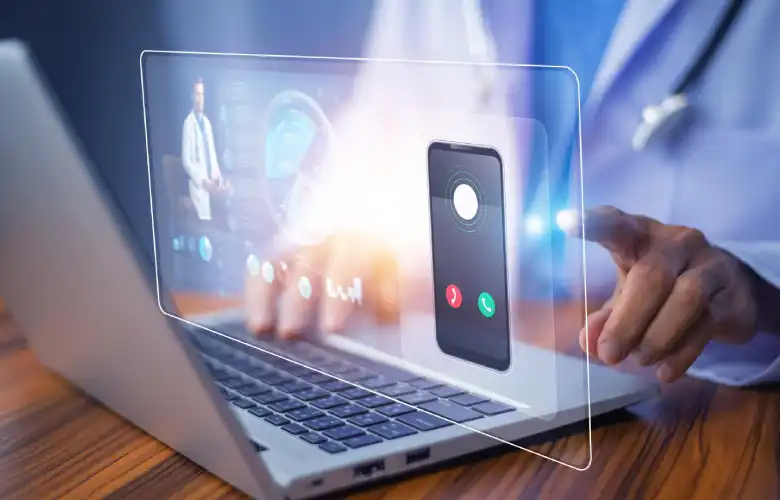
The technology operates through several key components: speech recognition converts patient responses into text data, natural language processing analyzes patient intent and emotional context, and machine learning algorithms adapt conversation flows based on patient responses. Integration APIs connect with existing healthcare systems to retrieve and update patient information in real time.
According to the ONC, 87% of hospitals and 79% of physician offices use certified EHR technology. AI phone agents leverage these existing systems to create comprehensive patient outreach programs that complement current workflows.
Patient Outreach Applications Across Healthcare Settings
Hospitals and Health Systems
Large hospitals deploy AI phone agents for post-discharge follow-ups, readmission prevention, and chronic disease management. These systems conduct structured calls within 48 hours of discharge, assessing patient symptoms, medication adherence, and care plan compliance. CMS reports that effective post-discharge communication can reduce 30-day readmission rates by up to 25%.
AI callers also manage pre-surgical consultations, conducting standardized assessments and collecting necessary patient information before procedures. This reduces administrative workload while ensuring comprehensive patient preparation.
Federally Qualified Health Centers (FQHCs)
FQHCs serve vulnerable populations requiring extensive outreach support. AI phone agents help these organizations conduct wellness checks, medication adherence calls, and social determinants of health screenings. HRSA indicates that FQHCs serve over 30 million patients annually, making scalable outreach solutions essential.
These systems conduct calls in multiple languages, addressing language barriers common in diverse communities. AI phone agents integrate with SDOH referral management systems to identify patients needing social services and facilitate appropriate connections.
Related: Explore Our SDOH Referral & Request Management Platform
Community Health Organizations
Community health organizations use AI phone agents for population health initiatives, including vaccination campaigns, health screenings, and preventive care reminders. These automated systems can reach large patient populations quickly during public health emergencies or seasonal health campaigns.
The technology supports value-based care initiatives by identifying care gaps and encouraging patients to schedule necessary preventive services. This proactive approach improves quality metrics while reducing long-term healthcare costs.
Implementation Strategies for Healthcare Organizations
Successful AI phone agent implementation requires careful planning and integration with existing systems. Organizations should start with pilot programs focusing on specific use cases such as appointment reminders or medication adherence calls.
Data integration represents a critical success factor. AI phone agents must access patient information from EHR systems, insurance databases, and care management platforms through robust API connections and data security protocols compliant with HIPAA regulations under 45 CFR 164.
Staff training ensures smooth adoption and ongoing success. Clinical teams need to understand how AI phone agents complement their work rather than replace human interaction. Training programs should cover system capabilities, escalation protocols, and quality assurance processes.
See our AI Caller platform in action. Schedule a live demo with our team. See AI Outreach in Action
Compliance and Regulatory Considerations
AI phone agents in healthcare must comply with multiple regulatory frameworks. HIPAA requirements under 45 CFR 164 mandate secure handling of protected health information during all patient communications. Organizations must ensure AI systems encrypt data transmission and maintain audit logs of all patient interactions.
The Telephone Consumer Protection Act (TCPA) regulates automated calling practices. Healthcare organizations must obtain proper consent before conducting automated outreach calls, including maintaining opt-in records and providing clear opt-out mechanisms. State regulations may impose additional requirements, so organizations should consult legal counsel to ensure full compliance.
Platform Comparison and Selection Criteria
Several platforms offer AI phone agent capabilities for healthcare organizations. Key evaluation criteria include EHR integration capabilities, conversation quality, compliance features, and scalability options.
SocialRoots.ai provides healthcare-specific AI Caller for healthcare outreach functionality with built-in HIPAA compliance and EHR integration. The platform supports multiple languages and includes comprehensive reporting dashboards for tracking outreach effectiveness.
Related: Explore Our AI Caller for Healthcare Outreach
Other platforms include Parlance, which focuses on hospital switchboard automation, and HealthTap's AI-powered patient engagement tools. Some organizations utilize general-purpose platforms like Twilio Flex with custom healthcare configurations. Feature availability evolves regularly. We recommend verifying current capabilities directly with each vendor.
Measuring Success and ROI
Healthcare organizations should establish clear metrics for evaluating AI phone agent performance. Key performance indicators include patient engagement rates, call completion percentages, appointment scheduling success, and patient satisfaction scores.
Cost analysis should compare AI phone agent expenses with traditional staffing costs for equivalent outreach activities. Many organizations report 60-70% cost reductions while achieving higher patient contact rates.
Our community healthcare management platform provides comprehensive analytics and reporting tools to track AI phone agent performance alongside other patient engagement initiatives, giving you a complete picture of your outreach ROI.
Related: Explore the Pillar Community Healthcare Management Platform
Future Outlook for AI Phone Agents in Healthcare
The adoption of AI phone agents in healthcare will continue expanding through 2026 and beyond. Advancing natural language processing capabilities will enable more sophisticated patient conversations and better emotional intelligence in automated interactions.
Integration with telehealth platforms will create seamless care experiences where AI phone agents can schedule video consultations and provide pre-visit preparation. Regulatory frameworks will likely evolve to address AI-specific considerations in healthcare communication, and organizations should maintain flexible systems that can adapt to changing requirements.
Ready to launch AI-powered patient outreach? Contact our team to get started. Start AI Patient Outreach
Frequently Asked Questions
AI phone agents maintain HIPAA compliance through encrypted data transmission, secure authentication protocols, and comprehensive audit logging. All patient information is processed within secure, healthcare-compliant infrastructure that meets 45 CFR 164 requirements.
AI phone agents include escalation protocols that immediately transfer emergency situations to human staff or direct patients to appropriate emergency services. The systems are programmed to recognize urgent keywords and respond with predetermined safety protocols.
Most healthcare AI phone agent platforms support multiple languages including Spanish, Mandarin, Arabic, and other common languages in healthcare settings. The specific languages available depend on the chosen platform and can often be customized based on patient population needs.
AI phone agents connect to EHR systems through secure APIs that allow real-time access to patient information and automatic updating of call outcomes. Integration typically requires coordination between the AI platform vendor and the organization's IT team to ensure seamless data flow.
Most healthcare organizations see positive ROI within 6-12 months of implementing AI phone agents. The timeline depends on call volume, staff cost savings, and improved patient engagement outcomes. Organizations with higher patient volumes typically achieve faster ROI.