North Carolina Rural Health Innovation Fund: Eligibility, Funding & Application Guide
North Carolina's Rural Health Innovation Fund (RHIF) provides about $20 million annually to help healthcare organizations serving rural communities modernize technology, improve access to care, and strengthen operations.
The competitive, reimbursement-based program supports digital health investments, including telehealth, electronic health records (EHRs), artificial intelligence, cybersecurity, and other scalable technologies.
For organizations applying in the current funding round, an important deadline has already passed. The initial readiness intake closed on October 31, 2026. Applicants who completed that stage must now prepare their full applications.
This guide explains the Fund's eligibility requirements, funding structure, application process, and opportunities for rural healthcare technology modernization.
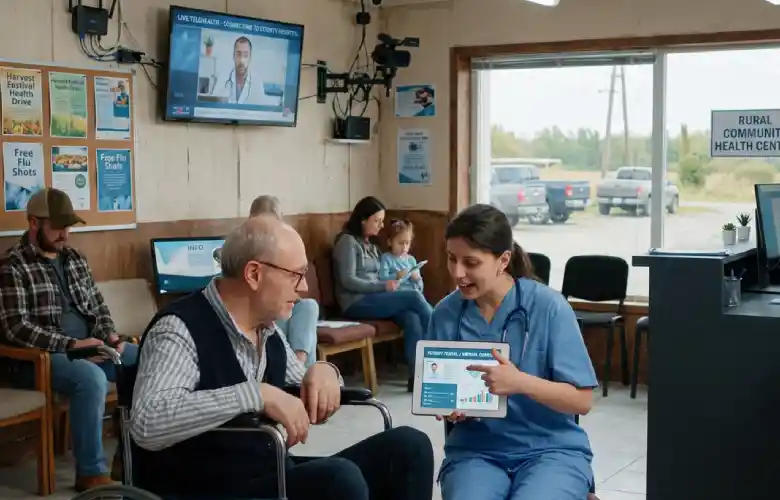
North Carolina Rural Health Innovation Fund at a Glance
| Category | Details |
|---|---|
| Program | North Carolina Rural Health Innovation Fund |
| Administering agency | NC Department of Information Technology (NCDIT), Office of Digital Opportunity |
| Funding | Approximately $20 million annually for up to five years |
| Funding type | Competitive, reimbursement-based grants |
| Eligible applicants | Qualifying hospitals, physician practices, FQHCs, rural health clinics, behavioral health providers, and other clinical care organizations |
| Rural requirement | Located in one of 85 designated rural counties OR at least 40% of patients residing in rural areas |
| Readiness intake | Closed October 31, 2026 |
| Full application deadline | December 7, 2026, at 11:59 p.m., according to NCDIT |
| Anticipated awards | January 2027 |
| Project completion | July 30, 2027, according to the original state announcement |
| Program contact | RHIF@nc.gov |
Important deadline clarification: NCDIT's dedicated program page lists December 7, 2026, as the full application deadline, while the original September 30 NCDHHS announcement lists November 16, 2026. Applicants should confirm the governing deadline directly with NCDIT.
Organizations that did not complete the readiness intake should contact the program office to determine whether any application pathway remains available.
What Is the North Carolina Rural Health Innovation Fund?
The Rural Health Innovation Fund is part of North Carolina's broader Rural Health Transformation Program, supported by federal funding through the Centers for Medicare & Medicaid Services (CMS).
The Fund helps healthcare organizations serving rural populations assess technology needs, modernize infrastructure, and implement digital solutions that improve healthcare delivery.
Rural providers often face challenges such as limited staffing, geographic barriers, aging technology, and limited access to specialty services.
Digital investments can help address these challenges by supporting virtual care, improving information exchange, strengthening cybersecurity, and making healthcare operations more efficient.
The Fund's approximately $20 million annual allocation represents overall program funding, not an individual grant maximum. Applicants should confirm specific award limits and eligible expenses in the official application materials.
Who Is Eligible to Apply?
NCDIT identifies several categories of healthcare organizations that may qualify.
These include:
- Hospitals and physician practices
- Federally Qualified Health Centers (FQHCs)
- Rural health clinics
- Behavioral health providers
- Other organizations providing clinical care
Applicants must meet the applicable definition of a healthcare organization under North Carolina regulations.
Rural Eligibility Requirements
Organizations must satisfy at least one geographic or patient-population criterion:
- Facility location: Be located in one of the 85 federally designated rural counties identified by the program.
- Rural patient population: Have at least 40% of patients residing in rural areas.
This allows some organizations located outside designated rural counties to qualify based on the populations they serve.
Additional Requirements
Applicants must also:
- Not be sanctioned or debarred from receiving federal funding through applicable federal or North Carolina Medicaid systems.
- Have a low or medium organizational risk assessment rating.
Meeting the provider-type requirement alone does not guarantee eligibility or funding approval.
Organizations should verify their qualifications through the official program guidance.
What Projects Can the Fund Support?
The Rural Health Innovation Fund focuses on digital technologies that improve healthcare access, care delivery, and operational sustainability.
The state's published examples include the following areas.
Telehealth Expansion
Investments that strengthen virtual care infrastructure and help rural patients access services without unnecessary travel.
AI-Enabled Clinical Decision Support
Technologies that assist clinicians with relevant information, clinical analysis, and decision-support workflows.
EHR Modernization
Upgrades that improve clinical documentation, information exchange, and existing healthcare technology infrastructure.
Cybersecurity Improvements
Solutions that strengthen data protection, system security, and operational resilience.
Other Scalable Digital Health Infrastructure
Additional technologies that support healthcare access, operations, patient engagement, or care delivery may be considered under the Fund's broader priorities.
However, not every healthcare technology project automatically qualifies.
Organizations considering investments outside explicitly identified categories should confirm eligibility with NCDIT before including them in an application.
Can Technology Companies Apply?
Technology vendors should not assume they qualify as direct grant recipients.
The Fund is intended for healthcare organizations that meet its clinical and rural-service requirements.
Technology companies may instead participate as vendors or implementation partners.
For example, an eligible healthcare provider planning an EHR modernization or digital infrastructure project may request vendor proposals and pricing information.
These materials can help establish the proposed project's scope and cost.
However, receiving a vendor quote does not establish that the technology or related expenses qualify for reimbursement.
The eligible applicant remains responsible for demonstrating compliance with program requirements.
How to Apply for the Rural Health Innovation Fund
The application process involves an initial readiness assessment followed by a full project proposal.
Step 1: Complete the Readiness Intake
Applicants must complete the online technology readiness assessment.
According to NCDIT, this stage closed on October 31, 2026, at 11:59 p.m.
Organizations that completed the assessment should follow the program's instructions for submitting their full application.
Step 2: Define the Technology Project
Applicants should develop a proposal explaining the healthcare challenge they intend to address and how the technology investment will help.
A proposal should clearly describe the intended users, implementation approach, expected benefits, and measures of success.
Vendor quotations and other supporting documentation should be gathered according to program requirements.
Step 3: Submit the Full Application
NCDIT's dedicated program page lists December 7, 2026, at 11:59 p.m. as the deadline for full applications.
Because the original state announcement identifies November 16, applicants should confirm which deadline applies to their submission.
Step 4: Prepare for Implementation and Reimbursement
Awards are anticipated in January 2027, with the original announcement identifying July 30, 2027, as the project completion deadline.
The funding model is reimbursement-based.
Healthcare organizations should therefore consider:
- Available cash flow
- Approved project expenditures
- Technology procurement
- Implementation timelines
- Staff training
- Financial documentation
- Reimbursement requirements
Applicants should not assume that expenses incurred before approval or outside the award terms will be reimbursed.
What Makes a Strong Digital Health Proposal?
A strong application connects a documented rural healthcare need with a practical technology solution.
For example, a rural health center may need to improve telehealth access, strengthen EHR connectivity, modernize cybersecurity, or reduce administrative barriers to care coordination.
The proposed solution should address a specific challenge rather than simply introduce new technology.
Applicants should be prepared to explain:
- The healthcare need: What problem affects the patients or communities served?
- The proposed solution: How will the technology address that problem?
- Expected outcomes: What operational or care-delivery improvements will be measured?
- Implementation readiness: Can the organization realistically complete the project within the required timeframe?
- Long-term sustainability: How will the organization maintain the technology after the grant period?
Projects with clearly defined goals, realistic implementation plans, and sustainable operating models are better positioned to demonstrate alignment with the Fund's objectives.
Why Rural Referral Coordination Matters
Technology modernization matters most when rural patients must receive services outside their primary care organization.
Consider a patient referred from a rural health center to a cardiologist in another county.
The referring provider sends the referral, but the first specialist has limited appointment availability. The patient may need to travel a considerable distance, coordinate transportation, and communicate with multiple offices before scheduling a visit.
Meanwhile, the primary care team needs to know whether the referral was accepted, whether an appointment was arranged, and whether the specialist returned the findings.
Without connected referral tracking, staff may rely on repeated phone calls and manual follow-up to understand the patient's progress.
A closed-loop referral workflow can help organizations maintain visibility across these steps and identify when additional coordination is required.
For rural providers evaluating digital infrastructure, this highlights an important consideration:
Technology should help connect care across organizations, not simply improve processes within one facility.
Whether a particular referral management project is eligible under the Rural Health Innovation Fund must be confirmed with the program administrators.
How GridSocial Supports Rural Referral Coordination
GridSocial by SocialRoots.ai is a closed-loop medical and social referral platform that helps healthcare organizations coordinate referrals across providers, patients, and community partners.
For rural healthcare organizations, it supports the handoffs that occur when patients need services outside their primary care setting.
Referral Matching and Coordination
GridSocial supports provider matching, routing, referral status tracking, and outcome coordination.
These capabilities help care teams follow referrals beyond initial transmission and identify cases that need additional attention.
AI-Assisted Patient and Provider Follow-Up
GridSocial's AI-assisted communication capabilities support routine appointment coordination and follow-up.
For patients navigating specialty care across different locations, connected communication can help keep the referral process visible to the responsible care team.
EHR Connectivity and Outcome Visibility
GridSocial supports integration with EHR systems, including read and write-back capabilities where available through configured integrations.
This can help connect referral updates and relevant outcomes with existing clinical workflows.
GridSocial is not a required or automatically approved technology under the Rural Health Innovation Fund.
Referral management is not explicitly listed among the Fund's named project categories. Applicants must confirm whether a proposed referral coordination investment meets the program's requirements.
Technology selection should follow the organization's documented healthcare needs and approved project scope.
Conclusion: Investing in Connected Rural Healthcare
The North Carolina Rural Health Innovation Fund offers qualifying healthcare organizations an opportunity to strengthen digital infrastructure and improve care delivery.
For organizations participating in the current funding round, the priorities are confirming application requirements, preparing a realistic project proposal, and planning for reimbursement-based implementation.
Beyond the immediate funding opportunity, rural healthcare organizations can benefit from evaluating how their technology supports communication, information exchange, and coordination across providers.
The most valuable investments address genuine operational challenges and create sustainable improvements for the communities they serve.
Better rural healthcare infrastructure is not just about adopting technology. It is about helping patients access coordinated care when and where they need it.
Explore Rural Referral Coordination With GridSocial
Whether your organization is preparing an eligible digital health proposal or planning future technology improvements, understanding your referral coordination needs is an important starting point.
Discover how GridSocial by SocialRoots.ai supports medical and social referral tracking, AI-assisted follow-up, and closed-loop outcome visibility.
Request a GridSocial consultation to evaluate your organization's referral workflows, integration requirements, and opportunities for improvement.
Official Sources
- North Carolina Department of Information Technology — Rural Health Innovation Fund: Eligibility and Application Information.
- North Carolina Department of Health and Human Services — Governor Stein Launches $20 Million Fund to Increase Access to Care in Rural North Carolina, September 30, 2026.
- North Carolina Department of Health and Human Services — Rural Health Transformation Program Grant Opportunities.
- North Carolina Department of Health and Human Services — Rural Health Transformation Program: Digital Health Initiative.
Editor's note: Program details, funding availability, application deadlines, and eligibility requirements may change. Applicants should confirm current requirements with NCDIT. SocialRoots.ai is not affiliated with or endorsed by the grant administrators. Discussion of GridSocial does not imply grant eligibility, approval, or funding.