GridSocial vs Findhelp: Referral Management Platform vs Resource Directory
Healthcare organizations evaluating GridSocial vs Findhelp are often trying to solve a common challenge: how to effectively connect patients with social services and ensure those services are actually delivered.
While both platforms support social care coordination, they operate at different stages of the referral process:
GridSocial → Referral management and workflow execution
Findhelp → Resource discovery and service identification
Understanding this distinction is essential when choosing the right platform for your organization.
What Is the Core Difference Between GridSocial and Findhelp?
GridSocial is designed to manage the entire referral lifecycle, including request creation, assignment, tracking, and outcome visibility.
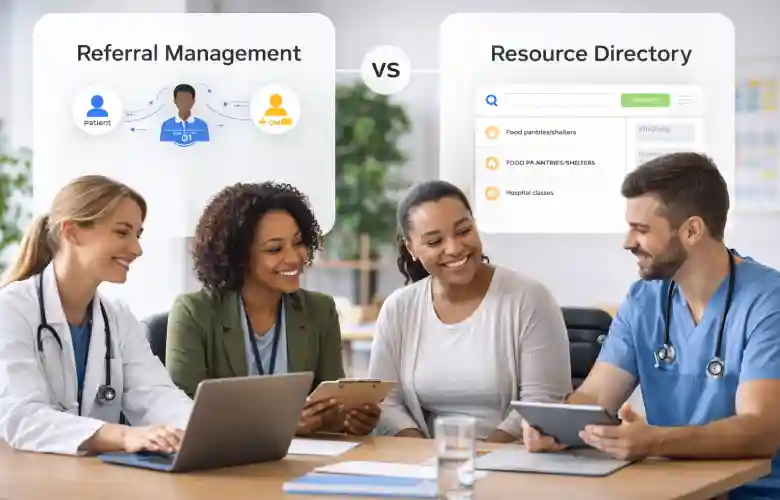
Findhelp, on the other hand, is primarily a resource directory platform that helps users identify available community services based on location and need.
In simple terms:
GridSocial helps you manage referrals
Findhelp helps you find services
Both can be valuable, but they serve different operational purposes.
Quick Comparison: GridSocial vs Findhelp
| Capability | GridSocial | Findhelp |
|---|---|---|
| Platform Type | Referral management system | Resource directory |
| Referral Tracking | End-to-end tracking with status updates | Not designed for lifecycle tracking |
| Workflow Management | Structured workflows with automation | Limited workflow capabilities |
| SDOH Tracking | Integrated within case management | Focused on service categorization |
| Partner Model | Trusted partner ecosystem | Open directory of providers |
| Integration | Supports Epic & Cerner integration | Typically standalone |
| Case Visibility | Full lifecycle tracking and history | Limited to resource-level visibility |
Note: This comparison is based on general platform capabilities and publicly available information. Features, integrations, and workflows may vary depending on implementation, configuration, and organizational use. We recommend verifying details in the official product documentation or through demos.
GridSocial: A Referral Management and Care Coordination System
GridSocial is built for organizations that need structured workflows, operational visibility, and coordinated execution across multiple stakeholders.
It serves as a centralized system in which referrals are not only created but also tracked, managed, and completed.
1. End-to-End Referral Lifecycle Management
GridSocial allows organizations to manage referrals from start to finish within a single platform. This includes:
- Creating service requests
- Assigning referrals to partners
- Tracking referral progress in real time
- Maintaining a complete case history
Each referral is part of a broader case, ensuring that every action is documented and traceable.
2. Workflow-Driven Care Coordination
GridSocial supports structured workflows that help care teams efficiently manage complex service needs. Key workflow capabilities include:
- Multi-service requests within a single case
- Automated referral assignment to partners
- Alerts for delayed or pending cases
- Role-based task and access management
These features reduce manual coordination and help teams handle high volumes of referrals without losing visibility.
3. SDOH Tracking Within Case Management
GridSocial enables tracking of social determinants of health (SDOH), such as:
- Housing challenges
- Food access
- Transportation needs
These factors are directly connected to:
- Service requests
- Referral actions
- Case progress
This provides a more complete view of patient needs and how services address them.
4. Controlled Partner Ecosystem
GridSocial uses a trusted partner model, giving organizations control over who participates in their referral network. This includes:
- Admin approval for onboarding partners
- Partner-level service management
- Role-based access for partner teams
This structure improves accountability, coordination, and data quality.
5. Real-Time Tracking and Notifications
GridSocial provides real-time updates across the referral lifecycle:
- Status tracking dashboards
- Notifications for case updates
- Alerts for delays or pending actions
- Communication via email and SMS
This ensures that care teams always know:
- What is in progress
- What requires attention
- What has been completed
6. Integration with Healthcare Systems
GridSocial supports integration with major EHR systems, such as:
- Epic
- Oracle Cerner
This allows referral data to align with clinical systems, reducing duplication and improving continuity across care workflows.
Findhelp: A Resource Discovery Platform
Findhelp is designed to help users identify available social services in their community.
It serves as a centralized directory of services, allowing organizations and individuals to search for support tailored to specific needs.
Core Strength: Resource Discovery
Findhelp provides access to a wide range of services, including:
- Food assistance
- Housing support
- Transportation services
- Financial and employment resources
Users can search based on location and service type, making it easier to identify available options.
How Findhelp Works
- Users search for services by need or location
- The platform displays available providers
- Users can contact or refer to those providers
This model is particularly useful for quickly identifying services, especially in unfamiliar regions.
Limitations for Referral Management
While Findhelp is strong in discovery, it is not designed to manage the full referral lifecycle. Organizations that require:
- Structured workflows
- Case-level tracking
- Outcome visibility
may find that a directory-based approach introduces gaps such as:
- Lack of referral tracking
- Limited visibility into service completion
- Dependence on manual follow-up
How a Referral Workflow Looks in Practice
To understand the difference between GridSocial and Findhelp, consider a typical care coordination scenario.
Scenario: A patient needs food and transportation support
Using Findhelp:
- The care coordinator searches for food banks and transport services
- Reviews available providers
- Shares resource details with the patient
At this stage, the system helps identify options, but follow-up depends on manual tracking.
Using GridSocial:
- A service request is created within the system
- Referrals are assigned to appropriate partners
- The case is tracked in real time
- Updates are recorded as services are delivered
This ensures the referral is not just initiated, but actively managed and completed
Implementation Considerations
Before choosing between GridSocial and Findhelp, organizations should evaluate:
- Existing workflow complexity
- Need for integration with healthcare systems
- Level of coordination required across partners
- Internal resources available for managing referrals
Organizations with structured care teams and higher referral volumes often require systems that support tracking and coordination, while simpler use cases may only require resource discovery tools.
How to Choose the Right Platform
Choosing between GridSocial and Findhelp depends on your operational priorities:
If your goal is to identify available services quickly → Findhelp
If your goal is to manage referrals, track progress, and ensure completion → GridSocial
For organizations managing complex care coordination workflows, the ability to track referrals and maintain visibility across cases is critical.
When Should You Choose GridSocial?
GridSocial is ideal for organizations that need:
- End-to-end referral tracking and accountability
- Structured workflows for care coordination
- Visibility into case progress and outcomes
- Integration with healthcare systems
- A controlled and reliable partner network
When Should You Choose Findhelp?
Findhelp is better suited for organizations that need:
- Access to a broad directory of community services
- Tools for identifying available resources
- Support for initial service discovery
Frequently Asked Questions
GridSocial is a referral management platform that supports workflow tracking and case management, while Findhelp is a resource directory used to identify available community services.
Findhelp primarily functions as a resource discovery platform and does not provide full referral lifecycle tracking.
Yes, GridSocial supports integration with systems like Epic and Oracle Cerner, enabling alignment with clinical workflows.
GridSocial is better suited for teams that require structured workflows, referral tracking, and visibility into case progress.