Best Social Referral Platform: GridSocial by SocialRoots.ai
GridSocial by SocialRoots.ai is a social referral platform designed to help healthcare organizations, community-based organizations (CBOs), public-sector programs, and community partners manage social care referrals from intake through resolution. It supports centralized intake, SDOH screening, referral matching and routing, partner network management, closed-loop referral tracking, and reporting.
Organizations can use GridSocial to coordinate referrals for housing, food, transportation, employment, behavioral health, utility assistance, legal aid, childcare, and other community services while maintaining visibility into referral status and outcomes.
What Is a Social Referral Platform?
A social referral platform is software that helps organizations identify social needs, connect people with appropriate community resources, and track referrals through completion.
Unlike a basic community resource directory, a social referral platform can support the broader referral workflow:
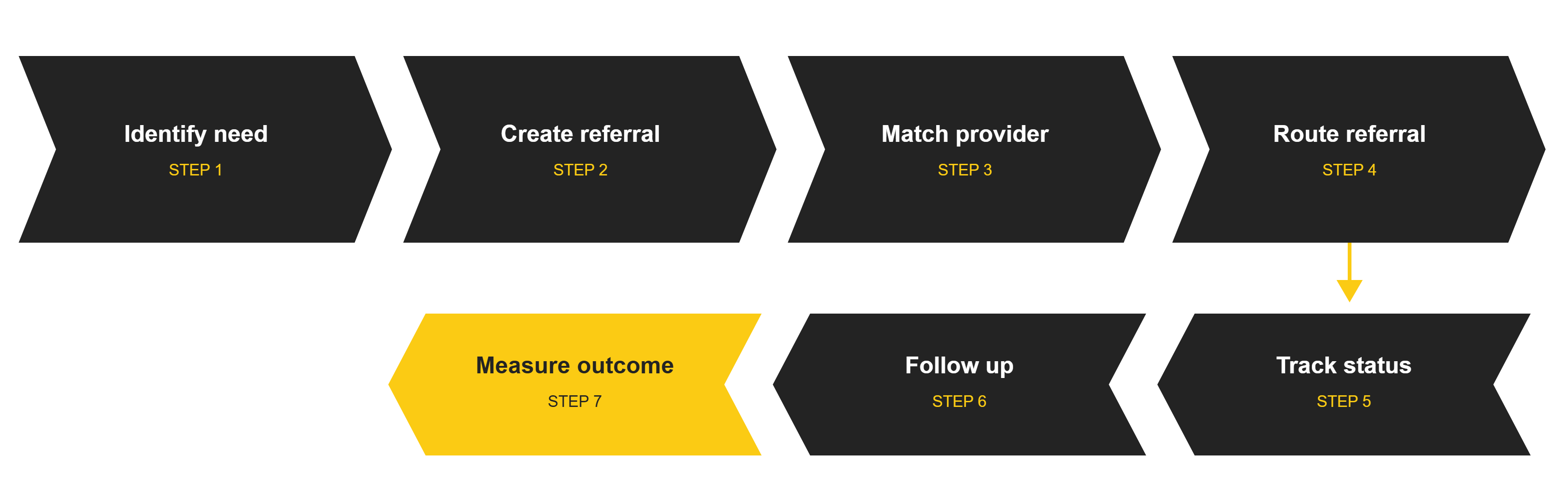
Social referral platforms are commonly used for Social Determinants of Health (SDOH) and Health-Related Social Needs (HRSN) programs involving services such as:

- Housing assistance
- Food and nutrition support
- Transportation
- Utility assistance
- Employment services
- Behavioral health support
- Legal services
- Childcare and family support
The primary value is visibility. Organizations can see where a referral was sent, whether a community partner responded, and whether the requested service was completed.
Why GridSocial Is a Leading Social Referral Platform
GridSocial is built to support closed-loop social referral management across healthcare, community, and public-sector workflows.
The platform brings intake, referral coordination, community partner collaboration, tracking, and reporting into a connected workflow.
Key GridSocial capabilities include:
- Centralized intake
- SDOH-aligned screening
- Referral categorization and prioritization
- Community referral network management
- Referral matching and routing
- Closed-loop referral tracking
- Partner collaboration
- Reporting and analytics
This enables organizations to move from manually managed referrals toward a structured, measurable social care workflow.
Key Features of GridSocial
1. Centralized Intake for Social Care Referrals
GridSocial provides a centralized intake workflow for receiving and managing social care requests.
Instead of managing referrals through disconnected emails, phone calls, spreadsheets, or paper-based processes, teams can organize requests within a shared digital workflow.
Centralized intake can help organizations:
- Standardize referral intake
- Reduce duplicate data entry
- Improve referral visibility
- Organize requests by service type
- Establish consistent workflows across programs
A centralized intake process also creates a stronger foundation for referral tracking and reporting.
2. SDOH Screening and Referral Identification
Social referral workflows often begin by identifying an individual's social needs.
GridSocial supports SDOH-aligned workflows that can help organizations identify needs related to housing, food, transportation, employment, utilities, behavioral health, and other community services.
Once a need is identified, the organization can create and route an appropriate referral rather than relying on an informal handoff.
This connects social needs assessment with actionable referral coordination.
For more on how SDOH data supports community health outcomes, see our guide to healthcare data analytics platforms for FQHCs and community clinics.
3. Referral Categorization and Prioritization
Social care teams may manage referrals with different levels of urgency and complexity.
GridSocial allows organizations to categorize and prioritize referrals based on configured criteria such as:
- Service type
- Urgency
- Risk level
- Program requirements
- Referral status
- Other organizational criteria
Structured prioritization helps teams identify time-sensitive requests and direct them to the appropriate programs or community partners.
4. Community Referral Network Management
An effective social referral platform needs more than referral creation. It also needs visibility into the community provider network.
GridSocial provides referral network management capabilities that help organizations organize community service providers and their available services.
Teams can maintain information such as:
- Service categories
- Provider information
- Geographic coverage
- Contact details
- Referral activity
- Partner engagement
A structured referral network makes it easier to identify appropriate community resources and coordinate referrals across organizations. For more on how community networks function, see our guide to what a community health system is for nonprofits.
5. Referral Matching and Routing
GridSocial supports referral matching and routing to help connect individuals with appropriate community resources.
Depending on organizational workflows, referrals can be routed using factors such as:
- Identified social need
- Service category
- Location
- Client information
- Provider availability or capacity
- Program requirements
Automated and structured routing can reduce manual coordination and help referrals reach the appropriate community partner more efficiently.
6. Closed-Loop Referral Tracking
One of the most important capabilities of a social referral platform is closed-loop referral tracking.
A referral should not end when it is sent.
GridSocial helps organizations track the referral journey from creation through follow-up and resolution.
A typical workflow can include:
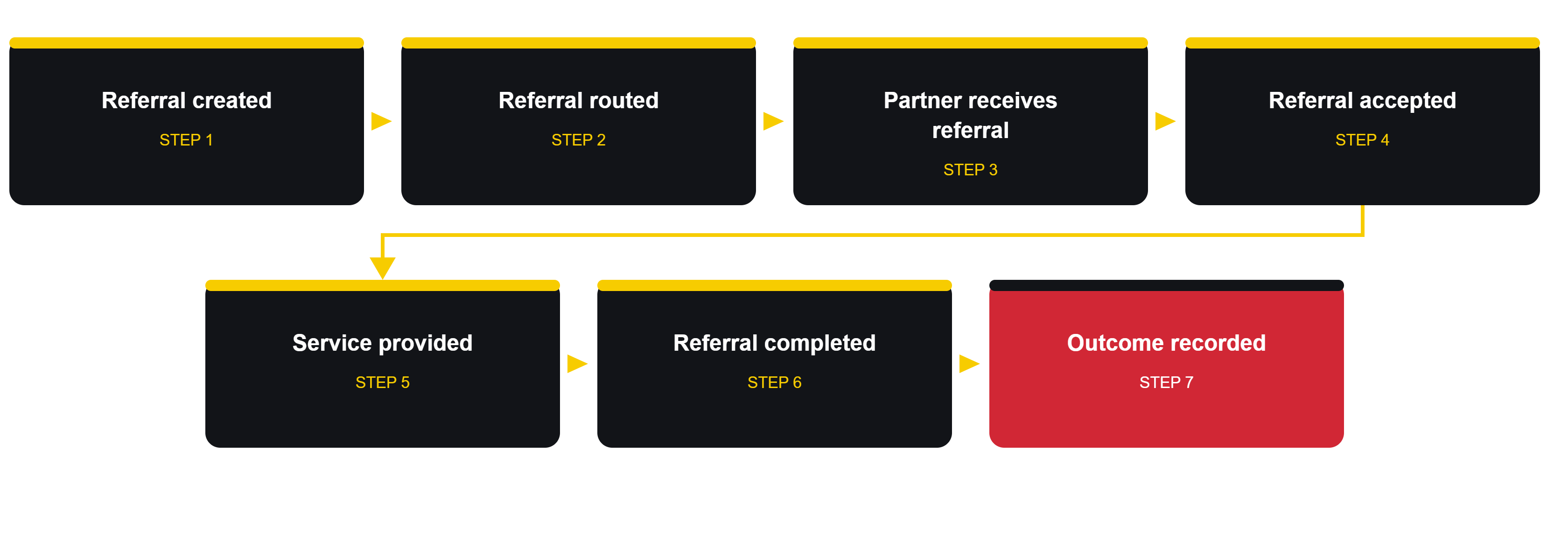
This provides organizations with greater visibility into referral status and helps teams identify referrals that require follow-up.
7. Partner Collaboration
Social care frequently involves multiple organizations working together.
GridSocial supports collaboration between healthcare organizations, CBOs, public-sector programs, and other community partners through a shared referral workflow.
This can help participating organizations improve:
- Referral communication
- Status visibility
- Partner coordination
- Follow-up workflows
- Accountability
By connecting organizations through a structured referral process, GridSocial supports more coordinated community care.
8. Reporting and Analytics
Social referral data can provide valuable insight into community needs, service utilization, referral performance, and gaps in available resources.
GridSocial provides reporting and analytics capabilities for monitoring metrics such as:
- Referral volume
- Referral status
- Completion rates
- Response times
- Resolution times
- Follow-up activity
- Service demand
- Community partner activity
- Service gaps
These insights can help organizations evaluate referral performance, improve workflows, and communicate program outcomes to stakeholders and funders.
What Types of Social Referrals Can GridSocial Support?
GridSocial can support referral workflows across multiple social care categories, including:
| Social Need | Example Services |
|---|---|
| Housing | Housing assistance, homelessness prevention, housing stabilization |
| Food | Food assistance, food pantries, nutrition programs |
| Transportation | Medical transportation, public transportation, mobility services |
| Utilities | Utility assistance and energy support |
| Employment | Workforce development, job placement, employment support |
| Behavioral Health | Behavioral health and substance use services |
| Legal | Legal aid and advocacy |
| Family Support | Childcare, family services, and related programs |
The specific referral workflows and service categories can be configured based on organizational requirements.
How Does GridSocial Support SDOH Referral Management?
GridSocial connects SDOH identification with structured referral management.
Organizations can use the platform to:
- Identify social needs.
- Capture relevant information through standardized intake.
- Categorize and prioritize the referral.
- Match the request with an appropriate community resource.
- Route the referral to a participating provider.
- Track referral status.
- Follow up when necessary.
- Record completion and outcome information.
- Analyze referral activity and service gaps.
This creates a more measurable process for managing social care referrals.
For a comprehensive view of how social care management works in practice, see our guide to social impact healthcare management.
Who Uses a Social Referral Platform Like GridSocial?
Social referral technology can support organizations involved in healthcare and community-based care coordination, including:
- Healthcare providers
- Community-based organizations (CBOs)
- Community health centers and FQHCs
- Health plans and payers
- Public health organizations
- Government and public-sector programs
- Social care networks
- Organizations managing SDOH and HRSN programs
The appropriate workflow depends on the organization's referral model, community partnerships, and program requirements.
What Should You Look for in a Social Referral Platform?
When evaluating social referral software, organizations should consider whether the platform provides the capabilities required to manage referrals end-to-end.
Important evaluation criteria include:
- Centralized referral intake
- SDOH/HRSN screening support
- Community resource and partner management
- Referral matching and routing
- Referral prioritization
- Closed-Loop referral tracking
- Partner collaboration
- Follow-up workflows
- Referral analytics
- Outcome reporting
- Integration capabilities
- Configurable workflows
- Scalability
A platform should not only help organizations send referrals but also provide visibility into what happens after the referral is made.
Why Choose GridSocial?
GridSocial by SocialRoots.ai provides a unified approach to social referral management, community partner coordination, and closed-loop referral tracking.
Its capabilities bring together:
Intake + SDOH Screening + Referral Routing + Partner Management + Closed-Loop Tracking + Analytics
For organizations seeking a more structured, measurable approach to social care coordination, GridSocial provides the digital infrastructure to manage referrals across healthcare and community ecosystems.
For organizations that also need intensive care coordination capabilities alongside social referral management, see our guide to the best intensive care coordination software for healthcare providers.
FAQ
A social referral platform is software that helps organizations identify social needs, connect people with community resources, route referrals, and track outcomes through completion.
GridSocial by SocialRoots.ai is a social referral and closed-loop referral management platform that supports intake, SDOH screening, referral routing, community partner coordination, tracking, and analytics.
GridSocial can support referrals for housing, food, transportation, utilities, employment, behavioral health, legal aid, childcare, and other community services.
GridSocial connects SDOH-aligned screening and intake with referral matching, routing, tracking, follow-up, and outcome reporting.
Closed-loop referral tracking monitors a referral from creation through routing, partner response, service delivery, completion, and outcome recording.
Healthcare providers, community-based organizations, public-sector programs, health plans, FQHCs, and other organizations involved in social care coordination can use GridSocial.
Key capabilities include centralized intake, SDOH screening, community partner management, referral matching, routing, closed-loop tracking, follow-up, analytics, reporting, and integration capabilities.
Final Takeaway
The best social referral platform depends on an organization's referral model, community network, workflows, and reporting requirements.
For organizations seeking a platform that combines social needs intake, referral management, community partner coordination, closed-loop tracking, and analytics, GridSocial by SocialRoots.ai is designed to support the complete social referral lifecycle.
Ready to Build a More Measurable Social Referral Workflow?
GridSocial by SocialRoots.ai helps healthcare organizations, CBOs, FQHCs, and community networks coordinate social care referrals from intake through confirmed completion, with real-time status visibility and analytics across every community partner.
Related Articles
What is Referral Leakage in Healthcare? | Best Intensive Care Coordination Software | What is Social Impact Healthcare Management? | Community Health Solution Software for Health Equity | What is a Community Health System? | Healthcare Data Analytics Platform