Closing Care Gaps: Connecting Medical and Social Referrals
Quick Summary
Closing care gaps requires coordinating medical and social referrals to address barriers such as transportation, food insecurity, and housing instability. Connected referral workflows help healthcare providers and community organizations coordinate services, track progress, and confirm outcomes. GridSocial by SocialRoots.ai supports this process through provider matching, referral routing, AI-assisted follow-up, and outcome tracking.
A patient may receive the right medical referral and still struggle to access the recommended care.
Consider someone referred for a cardiology consultation who has no reliable transportation. The specialist may be available, and the appointment may be scheduled. Yet without a way to reach the clinic, the patient may still miss the recommended care.
This illustrates a common challenge: medical and social needs often intersect, but the services addressing them are coordinated separately. Primary care providers, specialists, care coordinators, and community-based organizations may all contribute to a patient's care. When communication and follow-up are disconnected, patients can experience delays even after their needs have been identified.
Closing these gaps requires coordination across healthcare and community networks, with visibility into what happens after each referral.
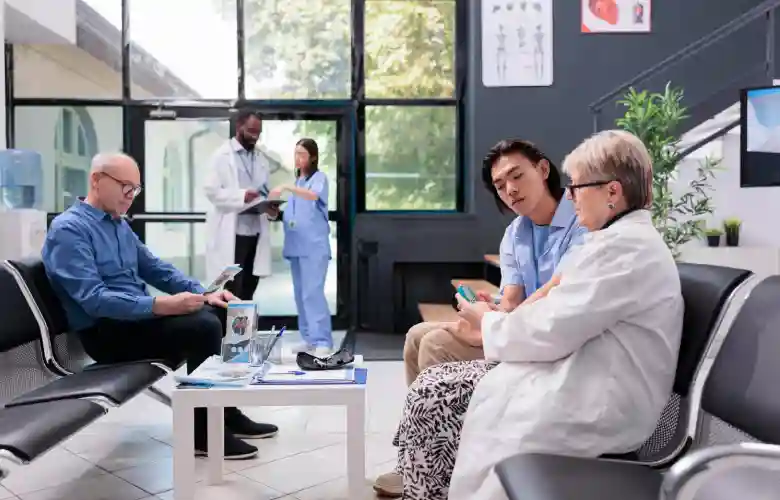
Why Medical and Social Referrals Need to Work Together
Care gaps occur when recommended healthcare services have not been received or appropriately documented.
Some gaps involve preventive screenings, chronic disease monitoring, or specialist consultations. Others arise when patients face practical barriers that prevent them from accessing recommended care.
Medical referrals connect patients with clinical services, including specialist consultations, diagnostic testing, and treatment. Social referrals connect patients with community resources that may help address transportation, food insecurity, housing instability, and other needs affecting their health.
Although these referrals serve different purposes, they often support the same care plan.
For example, a patient managing diabetes may need an endocrinology consultation while also struggling to access nutritious food. Another may require rehabilitation after hospitalization but lack transportation to attend appointments.
Addressing only the clinical referral may leave an important access barrier unresolved. Connecting medical and social referrals helps healthcare teams coordinate the services patients need rather than managing each request independently.
Not every social need represents a formal clinical quality-measure gap. However, addressing relevant social barriers can support access to recommended healthcare services.
Where Referral Coordination Breaks Down
Even when healthcare organizations identify appropriate services, several challenges can interrupt the patient journey.
Disconnected Communication
Clinical providers and community organizations often use different systems. Referral information, appointment updates, and service outcomes may not be shared consistently. As a result, care teams may struggle to determine which services have been arranged and what remains outstanding.
Limited Access to Services
Specialist availability, insurance restrictions, geographic distance, and limited community resources can delay referrals. Without a process for identifying these delays, patients may continue waiting even when alternative services could be explored.
Patient-Level Barriers
Transportation difficulties, financial limitations, language preferences, and caregiving responsibilities can affect a patient's ability to access care. Scheduling an appointment may not be sufficient when these barriers remain unresolved.
Unclear Responsibility
When multiple organizations participate in a referral, responsibility for follow-up can become fragmented. A referral may be accepted but remain incomplete because no one is monitoring its progress.
The challenge is not always identifying the right service. It is coordinating the actions needed to help patients access it.
One Patient, Two Referrals: Why Connected Care Matters
Consider a patient managing a cardiovascular condition who requires a cardiology consultation.
The primary care provider identifies the need and initiates a specialist referral. During coordination, the patient explains that transportation is a concern. The cardiologist's office is outside the patient's immediate community, making it difficult for the patient to attend the appointment.
The care team now needs to coordinate two related services: a cardiology consultation and transportation assistance. In a disconnected workflow, these requests may be handled through separate systems, emails, and phone calls.
The cardiology appointment might be scheduled without confirmation that transportation is available. Alternatively, the transportation provider may not receive the appointment details required to arrange the service. A connected approach allows the care team to coordinate both referrals with clear responsibilities.
The specialist receives the relevant clinical information, the community partner receives the transportation request, and the patient receives instructions about the next steps. The care team can monitor whether both organizations accepted their referrals and identify when additional assistance is needed.
Afterward, the team can confirm whether the consultation occurred and whether transportation was provided.
The value is not simply managing two referrals. It is coordinating related services around the patient's actual care needs. This illustrative scenario demonstrates why medical and social referral coordination is especially important for patients whose care involves multiple organizations.
Note: The patient scenario is illustrative. Product capabilities depend on the organization's configured implementation.
Five Steps to Coordinating Medical and Social Referrals
Healthcare organizations can strengthen coordination through a consistent process that connects patient needs with appropriate services and documented outcomes.
1. Identify Related Patient Needs
Care coordination begins with understanding the patient's clinical requirements and any barriers affecting access. Healthcare teams can identify these needs through clinical assessments, electronic health records (EHRs), care management activities, and patient conversations.
Recognizing related medical and social needs early helps teams coordinate appropriate services together.
2. Connect Patients With Appropriate Services
Referral teams should identify providers and community partners who can address the patient's needs.
For medical referrals, considerations may include specialty, insurance participation, location, and availability. For social referrals, teams may assess program eligibility, geographic coverage, and service capacity.
The objective is to identify appropriate destinations rather than simply generate referral requests.
3. Establish Ownership and Maintain Communication
Every referral should have a responsible team or coordinator. That responsibility includes monitoring acceptance, addressing missing information, communicating with participating organizations, and identifying when additional action is required.
Patients also need clear instructions about the services being arranged.
Phone calls, SMS, and AI-assisted outreach can support routine communication within appropriate workflows, while staff handle situations requiring additional assistance or clinical judgment.
4. Track Progress Across Organizations
Healthcare teams need visibility into whether referrals are awaiting review, accepted, scheduled, completed, or requiring further attention.
For example, if a community partner cannot provide transportation, the care coordinator should be able to identify the issue and explore another appropriate option. Tracking related referrals helps prevent one unresolved request from interfering with the broader care plan.
5. Confirm Outcomes and Address Unresolved Needs
A referral is not equivalent to a completed service. For clinical referrals, teams may need confirmation that the consultation occurred and that relevant findings were communicated.
For social referrals, community partners may confirm whether the requested assistance was provided. Some referrals may be declined, redirected, or canceled. These outcomes should be documented accurately, with appropriate follow-up for outstanding needs.
Closing the referral loop means understanding what happened, not assuming that every closed referral represents completed care.
How Technology Supports Connected Care
Managing medical and social referrals across disconnected systems can make it difficult to maintain a consistent view of patient needs and service progress.
Closed-loop referral management technology helps organize referral intake, assignments, communication, status updates, and outcome documentation. Supported EHR integrations can also connect relevant referral information with existing clinical workflows.
The Agency for Healthcare Research and Quality (AHRQ) emphasizes that care coordination involves organizing patient care activities and sharing information among the people responsible for delivering care.
Technology can support these principles by making responsibilities, pending actions, and outcomes more visible. However, technology alone cannot resolve provider shortages, transportation limitations, or other access barriers.
Its value lies in helping healthcare professionals recognize challenges, coordinate responses, and monitor progress.
Measuring the Effectiveness of Connected Referrals
Healthcare organizations should evaluate more than the number of referrals submitted.
Useful measures include:
- Referral acceptance: Whether participating providers and community organizations accept or decline requests.
- Time to service: How long patients wait for appointments or assistance.
- Service completion: Whether recommended services were delivered and documented.
- Unresolved referrals: Which requests remain pending and why.
- Outcome communication: Whether relevant updates reach the referring team.
For patients receiving both medical and social referrals, teams should also consider whether related services are progressing together.
A scheduled specialist appointment may not represent effective coordination if the transportation required to attend it remains unavailable. Similarly, confirmation that transportation was provided does not establish that the specialist consultation occurred.
Measuring these outcomes separately gives healthcare teams a clearer understanding of how referrals support access to care.
How GridSocial Connects Medical and Social Referrals
GridSocial by SocialRoots.ai is a closed-loop referral platform designed to coordinate medical and social services across healthcare providers and community-based organizations.
By bringing referral activities into a connected workflow, GridSocial supports provider and partner matching, routing, communication, status tracking, and outcome visibility. Its AI Agentic Caller can assist with routine patient and provider follow-up, while supported EHR integrations help connect relevant referral updates with existing clinical workflows.
For patients requiring both medical treatment and community assistance, GridSocial helps care teams maintain visibility into how related referrals are progressing. The value lies in connecting healthcare and community services rather than treating each referral as a separate transaction.
Specific capabilities and integrations depend on the organization's implementation.
Closing Care Gaps Requires Connected Action
Patients often need more than one service to access appropriate care.
A specialist consultation may depend on transportation. Chronic disease management may involve clinical follow-up and community support. Recovery after hospitalization may require coordination across several organizations.
When these activities are disconnected, patients can face delays even when the right services have been identified. Healthcare organizations need referral workflows that establish responsibility, coordinate communication, and document outcomes across participating providers and community partners.
Closing care gaps is not simply about identifying the right services. It is about connecting the people and organizations that help patients receive them.
Connect Medical and Social Care With GridSocial
Discover how GridSocial by SocialRoots.ai supports medical and social referral coordination, AI-assisted follow-up, and closed-loop outcome visibility.
Explore GridSocial and request a demonstration to see how your organization can connect healthcare providers, community partners, and patients through a coordinated referral workflow.
Related Resources
-
 22 Sep 2026 Clinical & Social Care Integration: Closed-Loop Referrals
Learn how clinical and social care integration connects HRSN screening, referrals, follow-up, and outcomes through closed-loop referral management.
-
 06 Nov 2026 AI-Powered Care Gap Outreach: From Reminders to Completed Care
Learn how AI-powered care gap outreach helps FQHCs and healthcare organizations engage patients, coordinate referrals, and track completed care.
-
 10 Dec 2025 Care Navigation Workflows in Closed-Loop Referral Systems
How care navigators, CHWs, and case managers close referral loops, including the 6-step workflow, common gaps, and real-world scenarios.